
Why Hospital Discharge Is Harder Than People Expect

Most people think leaving the hospital will be a relief.
While that’s true for some, it’s not the case for everyone.
Instead, what often happens is a mixture of feeling rushed, confused, and anxious. Once your healthcare team determines you are medically stable and no longer requires acute care, discharge is the next step. Meanwhile, you’re thinking, “I’m technically okay, but I don’t feel ready yet. My body and my brain are still catching up.”
A lot is happening at once:
You’re being given new information while tired, sore, or still foggy.
You hear instructions you’ve never had to manage on your own before.
You’re trying to remember details while also thinking, “I just want to go home.”
You’re wondering,“Who’s actually going to help me once I’m home?”
And often, the questions don’t even show up until hours or days later.
Discharge teaching happens quickly, assuming people are ready to absorb everything at once. In fact, most people aren’t.
I hear the same thing again and again:
“I thought I understood everything… until I got home.”
“I didn’t realize what I didn’t know.”
“I didn’t want to bother the nurses or doctors with more questions.”
Then you’re home, and suddenly you are managing a lot on your own:
Medication
Follow-up appointments
Paying attention to your symptoms
Figuring out when to call for help and when to give things time
This is a lot to carry, especially when you’re still healing.
It can help to think of discharge as a transition, which goes better:
When things are broken down into small, digestible steps.
When you’re able to revisit the information over time.
When you have one place to organize and keep track of important information.
That’s why tools like checklists and day-by-day guidance exist to reduce the mental load.
If you’re getting ready to leave or recently left the hospital, the Full Discharge Checklist can help you sort out what to focus on now and what can wait.
You don’t have to do it all at once. Just start where you are.
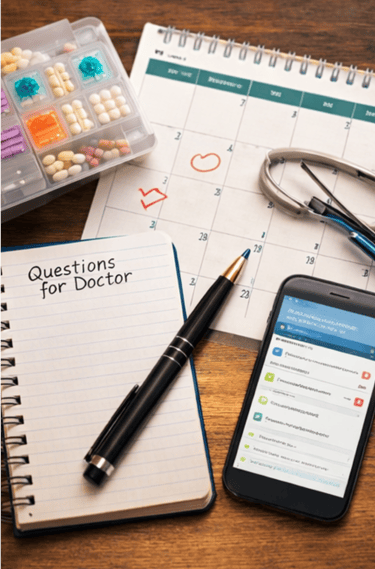
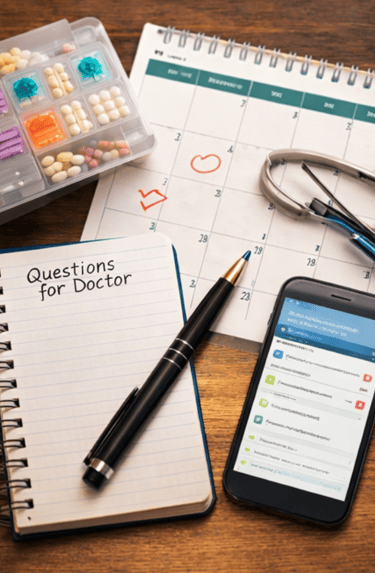
You don't have to do everything at once.
- Quick Guide -
After Hospital Discharge: Day-by-Day Support
Steps for Day 1, Day 3, and the first week after coming home.
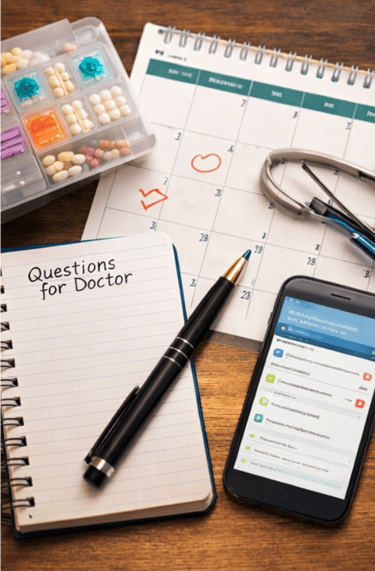
After Hospital Discharge: Day-by-Day Support
Quick Tips
You don't have to do everything at once.
Check boxes to make things easier to remember.
Your progress will stay saved so you can come back.
If you feel unsafe, call 911.


Share:
Empowering patients and families through nurse-led insights and the Akin companion app.


Contact
My Health Guide Hub and the Akin app provide educational and organizational resources to patients and those that support them. This is information, not medical advice. Use of this site or the app does not establish a nurse-patient relationship. Always consult your medical team for clinical decisions.